Showing posts with label industry placement. Show all posts

21 October 2020

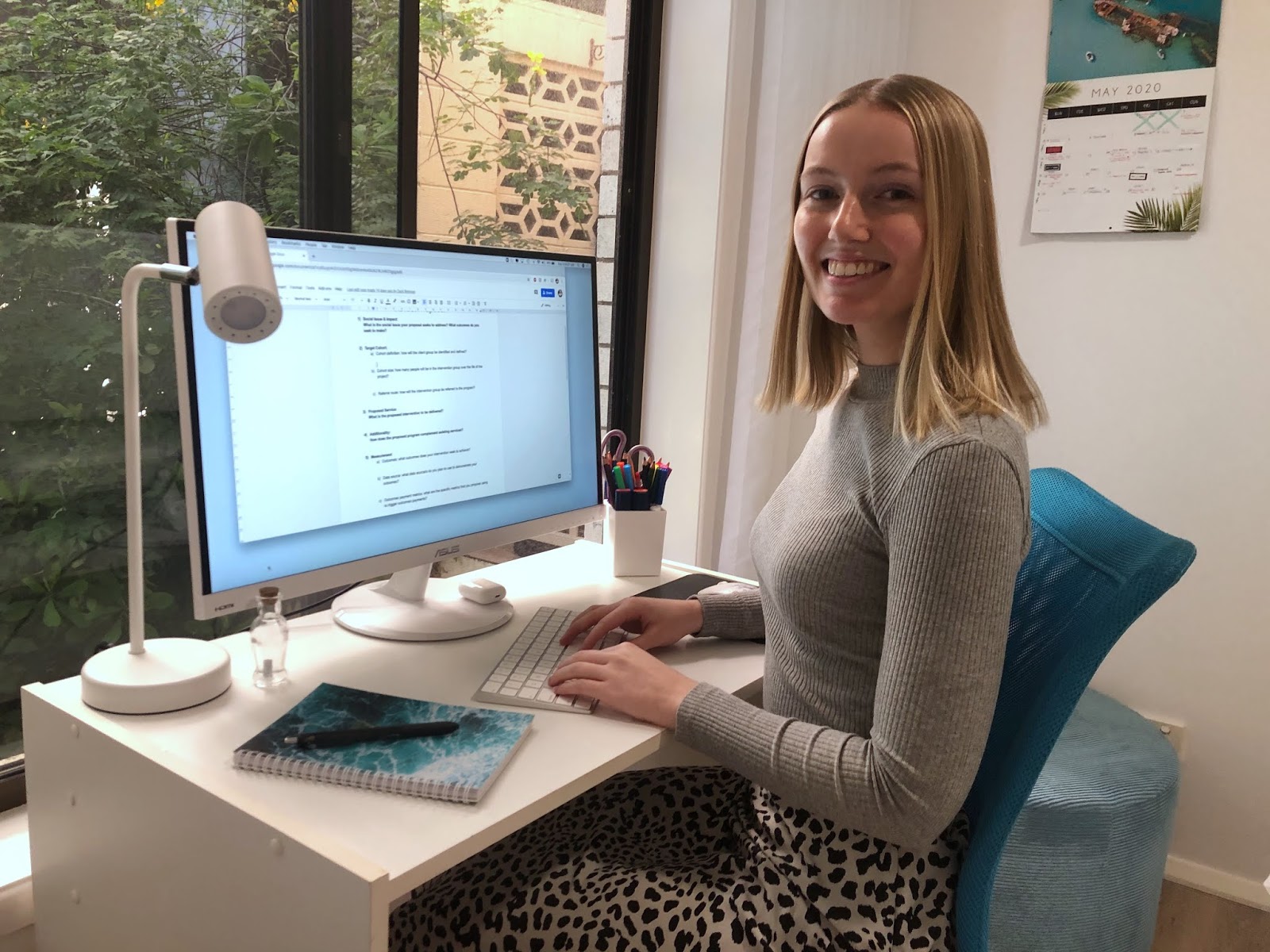
My Local Placement Program experience: Alyssa Wong

Bachelor of Commerce and Bachelor of Advanced Studies student Alyssa Wong shares her experience on the Local Placement Program (BUSS2100/BUSS6500).

What is the Local Placement Program?

The Local Placement Program allows business students of all majors to gain corporate work experience at a leading firm while obtaining university credits. This unique Work Integrated Learning unit offered by the University of Sydney matches students to a suitable role and firm based on your preferences and fit. 

How did you apply?

I applied in Semester 1 of 2019 and the application process consisted of submitting a CV and letter of motivation. Once I passed this initial screening, I completed a virtual interview, group case study and individual writing component before receiving an offer. For some internships, including my own, a final face-to-face interview with the host company was required. For future applicants, I would use this opportunity to polish up online interviewing skills as most internship recruitments now occur online, especially with social distancing measures in place.


Placement Program students Dhruv Sood, Phoebe Yang, Alyssa Wong, Hugh Dawson, Rishabh Khanna


Where did you work?

The Placement Program team matched me to Macquarie Group, a leading Australian Investment Bank, based in Sydney’s CBD. With my Finance and Banking majors, I was placed in the equity research team covering Banks and Diversified Financials. In this role, I strengthened my analytical skills and helped publish content in Macquarie Insights Reports.

How did the program help your career?

The Local Placement Program offers many students their first internship, at a reputable host company no less. This will automatically highlight you in any application process. Furthermore, my supportive team assigned tasks that were both interesting and challenging, providing me with many learning opportunities for hard and soft skills development relevant in the financial sector.  

What was the best part of your placement?

The best part of my placement was the opportunity to work with and meet a diverse range of bright industry professionals. I was able to connect with people within my team and other business units within Macquarie Group, where I gained more insight into the world of finance and banking. Ultimately, this helped me understand the possibilities of where I could take my career.

What was the biggest challenge and what did you learn from it?

One of the challenges I encountered as a university student working with seasoned industry professionals was the lack of self-confidence I had in my skills. It was exciting to intern in an office where colleagues' careers span longer than my age as I could learn so much, but I felt inexperienced. I overcame this challenge and improved my self-confidence by asking questions if I needed clarification on tasks and being proactive in developing relationships with my buddy, colleagues and fellow Local Placement Program interns.

What advice would you give other students? 

For future Local Placement Program applicants, I would recommend leveraging the support the university provides to put your best foot forward. I utilised the Careers and Employability Office for resume and cover letter checking, mock online interviews and case study workshops. In retrospect, I was grateful for this experience as it was similar to summer internship applications this year. I also recommend reflecting upon the daily tasks you completed as an intern as you can refer to your notes to recall experiences and quantify your impact during future job interviews. Lastly, strive to build good working relationships with your colleagues and offer your help to people inside and outside your team as you never know what valuable insight and advice they can give you to develop personally and professionally.

12 June 2020

My Local Placement Program experience: Emma Debus

Bachelor of Commerce student Emma Debus shares her experience on the Local Placement Program (BUSS2100/BUSS6500).

The Local Placement Program gave me the opportunity to work for a leading firm as part of my degree. This semester I completed a Local Placement Program three days a week for ten weeks. I applied to be part of the program at the beginning of Semester 2 in 2019. The process of being accepted into the program involved an application, a video interview and an assessment centre. By the end of Semester 2 I found out that I was going to be working at Nestlé for KitKat Chocolatory.

Emma Debus

My internship was supposed to be centred around the opening of a KitKat Chocolatory store in Sydney’s CBD in April. Following two days working in Nestlé’s office in Rhodes, I was told that the remainder of my internship would be virtual, and the store wouldn’t be opening until isolation restrictions loosened. Instead, I was involved in the planning and design of new KitKat products. This involved Skype meetings with people at the factory explaining the capabilities of the chocolate machines. Luckily not being at the Nestlé office didn’t restrict my chocolate intake as new KitKat products were sent to where I was isolating. I also conducted extensive research into confectionary and medicated trends to assist Nestlé’s brands in responding to competitors.

Part of the Local Placement Program involved reflections about my experience interning. Through the process of reflecting I was able to understand more about how my personality characteristics influence my working style. Writing reflections also revealed the impact of my studies in preparing me for the workplace. For example, marketing subjects prepared me well for creating presentations and conducting research effectively.

Working virtually posed technical difficulties and changes to my work content as the KitKat Chocolatory store couldn’t open in the city. Now, as I have gained an understanding that you need to be adaptable to unique issues that digital communication brings, I am more relaxed when technical difficulties arise as I recognise that technology is not a domain that I can perfect. Looking back, interning from home has equipped me with skills necessary for an evolving workplace as working virtually becomes more common.

I strongly recommend to anyone part of the business school to apply for the Local Placement Program.

Learn more about the Local Placement Program here.

5 June 2020

My Self-Sourced Placement Program Experience: Paris Vergan

Bachelor of Commerce student Paris Vergan shares her experience on the Self-Sourced Placement Program (BUSS2200/BUSS6514).

What is the Self-Sourced Placement Program?


The Self-Sourced Placement Program is one of the University of Sydney Business School’s work-integrated learning (WIL) programs. This program is fantastic for individuals who have already sourced internships and want to gain academic credit and reflective skills. It allows you to choose your own pathway to employment by deciding upon a role you know you will enjoy, in a company which values align with your own.

Paris Vergan

How did you source your placement?


I attended a corporate partners networking event hosted by the Business School and sat next to who became my supervisor! By engaging with him about my passions for Marketing and Commercial Law, he offered me an opportunity to interview for a work placement. After following up, I got the job!

Applying for the program was super easy and consisted of submitting an expression of interest to the WIL hub. After reviewing and confirming my application, University staff were extremely supportive and offered one on one consultations every couple of weeks to check up on my experience and help discuss any reflective tasks.

Overall, I am really fortunate I underwent the placement as it allowed me to experience the workforce, expand my professional network, develop practical skills and enhance my reflective abilities.


Where did you work and what did you do?


I underwent my placement at the French Embassy Trade Commission, working in their commercial division ‘Business France’ as a Trade Advisor. The role entailed assisting the growth of French businesses in Australia by performing market research studies on specific industries and identifying areas of opportunity, as well as facilitating partnerships between French Businesses and Australian companies.

I worked on a number of large-scale projects, such as organising industry conferences, business to business round table workshops and international webinars. This allowed me to gain specific industry knowledge, develop interpersonal skills by building rapport with our clients and overall achieve greater confidence in my professional abilities.


What was the biggest challenge?


One of the largest challenges my team and I faced was the shift from in-person collaboration to virtual teams due to COVID-19. This reactive change meant my colleagues and I had to adopt new online systems to communicate effectively and set up productive workspaces at home to adapt to the external circumstances. The experience taught me lot including how important it is to develop clear lines of communication, how to become flexible and open to new ways of achieving tasks and that setting team goals is really helpful to stay motivated. Overall, I believe this learning opportunity was quite unique and equipped me with great skills to use in future teams which may collaborate virtually.


How did the Self-Sourced Placement Program help your career?


The placement has offered me a wide array of new experiences, such as liaising with international clients, growing accustomed to cultural challenges, organising large scale events and developing interpersonal relationships with long-term partners. It has been a highly rewarding experience as I have been able to develop skills in cultural competence, effective relationship management and timely communication. Most importantly, the placement helped me gain a perspective of what it is like to engage in a professional work environment, make friends who happen to be co-workers and gain a new social circle.

The best thing about taking on a local placement is the proud feeling of accomplishment when your colleagues acknowledge your work, as well as the fun after-work social gatherings. I would highly recommend the Self-Sourced Placement Program as it will allow you engage with a professional work environment, network with like-minded people and develop practical skills for future employment.


Students can now enrol in the Self-Sourced Placement Program for Semester 2, 2020 via Sydney Student. Learn more about the Self-Sourced Placement Program here.

9 April 2019

A Guide to Spending Summer in San Francisco’s Winter

Prior to completing the Industry Placement Program, I had never travelled outside New South Wales on my own before. So why did I even consider going to the other side of the globe? For me, IPP was the right balance of academic, work and travel… the perfect opportunity to spend a summer in winter.

Applying for IPP


In my first year, I had spent my summer break working full-time and eventually regretting a chance to do something different. When I had considered how I’d use my next break, I decided it was best to take a unit and, from my research, I found the Local Industry Placement Program (IPP). I was sold having attended the Info Session, as I realised the uniqueness of the cultural immersion offered by travelling to the US! As an equity student, hearing about the scholarships available made me realise that travelling would be realistic. In order to stand out amongst the competitive crowd, I had attended different sessions offered by the Careers and Employability Office and utilised their resources on Canvas to tailor my application.

My IPP experience


I was hired as a Policy Intern at Livable City, a non-profit organisation aiming to improve San Francisco’s liveability. I was nervous as I had limited experience in data analytics and no understanding of the local neighbourhood’s conditions. However, my co-workers were friendly and always wanted to know more about Australia. The comforting work environment and office cat (Puff Puff) made me feel as though I could easily ask questions about my projects.

The office cat, Puff Puff
Upon completion of my placement, I had exceeded expectations by completing two different projects! To finish off my 5 weeks, I presented in front of the organisation on my findings, what I had learnt and my own perspective on San Francisco city.

My final work day: The team wanted me to sit on a bike since they knew I didn’t know how to ride one


Highlight of the trip: my own San Francisco tour!


The most important thing I learnt while travelling was to research how to manage my time. The first few days of having no sim card, not understanding where I was living or even having the bare necessities to live in my apartment were difficult. At that moment, I had promised to spend the following weekends exploring San Francisco sites, travelling across the bays and to show my family I was making an effort. My proudest moment was when I successfully pulled off a full day of visiting Fisherman’s Wharf, In N’ Out, the Maritime National Museum, Lombard Street, the Golden Gate Bridge, Chinatown, the Golden Cookie Factory, the Cable Car Museum and the Grace Cathedral! This gave me the confidence to spend the following weekends visiting other popular destinations and making time for the assessments in-between. The best part of the trip was reporting my adventures back to my colleagues and taking their advice on where I should go next.


Now it’s your turn to apply! 


Completing this program has been transformative on how I approach university and work in Sydney. I have learnt to balance my professional, academic and personal goals through organisation techniques adopted in America. This has been possible due to the amazing team in the Careers and Employability Office dedicating so much effort in finding me a suitable placement. I have grown into a student capable of travelling across cities on her own, with a mature outlook on the workplace.

The rooftop of our apartment, located near Twitter Headquarters

Despite any concerns you may have, there is nothing to lose by sending in an application. My experience continues to live on as I stay connected with fellow peers, as well as my co-workers at Livable City. Submit your IPP application for your journey of a lifetime!

Written by Catherine Nguyen

30 June 2015

Our adventures in Paris begin

I write this blog post on the Eurostar as it zooms to London after surviving my first week of the Paris International Placement Program (IPP). Last weekend, twenty undergrads and postgrads from the Business School descended upon Paris, some even managing to squeeze in trips to Lisbon and Barcelona enroute. Travel is an obvious perk of the program and we intended to make the most of it!

Seine River, 9:30pm

But it’s not all play without hard work. The first days were long with work placements from 9am to 5pm and after that, French language classes and European Union studies lectures at Sciences Po until 9pm. Thankfully, summer is Paris means sunset at 10:30pm, so you’d hardly notice that you’ve just survived an intellectually stimulating and physical (walking, hopping on-off the Metro) 12-hour day. After class, we could still go for a wander to take photos, have dinner at a cafe (cheese and wine, if you prefer) and pick up groceries on the way back to our hotel. Unfortunately, shopping the mid-year sales is only possible on weekends. There’s only so much you can fit into a day in Paris!

Sciences Po
The first week of working aboard was eventful. My supervisor turned out be based in Berlin, which although unexpected, is beginning to teach me skills on remote working relationships. All my colleagues are French and speak only French during lunchtimes, which is good incentive to work harder on my French!

Sciences Po Courtyard

I get to walk past the Louvre every day (not many can say this!) enroute to classes at Sciences Po which start at 6pm. French architecture is spectacular and you have to experience the scale of the buildings, boulevards and bridges in person, as photos taken on your iPhone fail to do it justice. The city is steeped in history - my office shares the same laneway as the house where Mozart spent his last days, while famous European treaties were signed merely a few blocks away from our classroom in Sciences Po.

Lourve

Undoubtedly, the highlight of the week for all of us was the visit to the Australian Embassy where we met with Ambassador Stephen Brady, who graciously hosted us at his residence and was very generous with his time. He shared his insights on the globalisation of the workforce for our generation and candidly took us through his career path and the complexities of his role in the hopes of encouraging us to consider an intellectually rewarding career in international relations. We spent over two hours at the 800m2 residence which overlooked the Tour Eiffel and admired the stunning Aboriginal and modern Australian art and interior design which was truly representative of Australian identity. A special thank you from all of us to Carson for making the meeting with Ambassador Brady possible!

Australian Embassy

Bon weekend as we venture off on our first weekend in Europe - London, Munich, Prague, Rouen and Versailles are just some of the destinations that our group will cover in the next 48 hours. Next week we will be moving from our hotel accommodation to Cité Internationale Universitaire de Paris (Cité U for short) to immerse ourselves in Parisian student life. A bientot!

Farah Tan
Current student at the University of Sydney Business School and participant in the International Placement Program in Paris, France

6 May 2015

My Industry Placement Program Experience at PwC Beijing

It is always a good opportunity to have real world experiences as a business student. What is happening in the real world very is very important to me to complement my studies in the classroom. Six months ago, I was lucky enough to join the Industry Placement Program (IPP) and work at PwC in my hometown, Beijing.


I’m the kind of person who always strives to set goals before taking action. At the beginning, I put down a few objectives. However, the story in the real world is always different, insofar as you never have the chance to complete your goals one at a time. Unlike the classroom, you can easily feel overwhelmed by many tasks and must be able to adapt to the pace in the firm in order to catch up with others as soon as possible.

I worked in the Risk & Assurance department for two and half months. Our job included designing and evaluating internal control systems for some state-owned enterprises in China. It started with a few days of preparing and editing biding documents for clients, and also many other tedious, but important jobs. 'Every brick is essential for building a house', and from the very beginning I began to develop an understanding of the whole business.


Later, I was given the opportunity to further grasp the essence of the job on a three-week business trip. Working in a team is always very interesting. None more so than in one of the Big Four accounting firms, as I had so many opportunities to interact with people from different backgrounds, and, as such, dramatically improved my interpersonal skills. One extremely valuable experience was the opportunity to interview senior managers of our clients, allowing me to understand how managers conduct their work and think from their perspective.


The unique element that distinguishes IPP from other programs is that it actually provides the chance for peers to share their experiences. In China, all the participants lived together, no matter which company they were allocated over the six-week period, which gave us the chance to share all our interesting stories. Even the catch-up on weekends was a special part of it. Having heaps of friends around you to talk about the funny things, not only helps you learn more about office politics, but also enriches the experience, as you are not on your own.


Overall, I gained insight and tranferable skills in a diverse range of areas. Time management is perhaps the most important one, as you have to cultivate multi-tasking skills in order to meet deadlines. In addition, learning how to handle stress in the workplace, especially in professional services, can help you to achieve more and also make the work more enjoyable.

I really appreciate that I had the opportunity to put what I’ve leant in to practice during my last year at Uni, and I can’t wait to graduate and have more exciting stories in the future.

Anqi Dong
Anqi is an international student student at the University of Sydney Business School. Anqi recently completed an internship with PwC in Beijing as part of the Industry Placement Program.

17 April 2015

Just need to take the first step

Nine months ago, I stepped off the plane in Sydney after many hours in flight. It was an early chilly morning. Looking at the newly risen sun, I took a deep breath of the cold air, full of unfamiliar smells, telling myself that I could fulfil my goals.

However, to achieve these goals was anything but easy. I thought I had learned English well enough, but then I found myself barely understanding the conversations around me. I thought I was good at studying, but then I found myself having difficulties applying my knowledge to real cases. I thought I could find an internship at a local firm in the same way I did in China, but then I found myself limited in many aspects as an international student. There were so many challenges and much competition. I was scared. I began to lose confidence.

It was at this point that I decided to go for a consultation at the Business School career kiosk. Through the consultation, I realised that since the possibility for an international student to enter a local firm would be relatively slim unless haivng a high English level and necessary working skills that could match native students, what I needed to do was take a step forward, leaving my comfort zone to enhance my capabilities.

The first step I took was taking part in Neuroblastoma Australia – a charity activity – as a volunteer. At the beginning, I was too shy to speak and was afraid of doing things wrong. But as soon as I finally took the first step to start chatting with Shirley, a friendly girl who was working next to me, I immediately knew that I had worried too much. Actually, we had many things in common, and we might have kept talking forever if time permitted.


Later she introduced me to her friends who were also working there as volunteers. Gradually, the barrier in my heart disappeared. At the end of that day, not only did I finish my job well, but I also got to meet many new friends and had fulfilling conversations.


Encouraged by this volunteer experience, I joined many other activities. At the same time, I kept gaining employment skills from the Business School's Careers and Employability Office (CEO) career workshops, where I learned how to modify my resume, enabling me to stand out in an Australian employment environment. I also embraced opportunities to network with employers and recruiters, and so on. Several months later, in the summer holiday, I was offered an internship position from a Sydney company, which although small, provided me with a great opportunity to apply what I’ve learned in a real-world setting.

A week ago, I walked into the career kiosk consultation office again. This time, I had a professional resume with two pages full of my extra-curricular activity and internship experiences in hand, and talked in much more fluent English with a confident tone. I was going there for Industry Placement Program (IPP) application advice.

Another winter is coming now. Looking at the newly risen sun, I take a deep breath of the cold air, and smile. It is never easy to go uphill, but it may not be as hard as we think as well. All we need to do is take the first step, and have the initiative to be fully prepared for future opportunities, so that when we look back, we will be proud of how far we have walked.

Brenda Zeng
Brenda is an international student and current student at the University of Sydney Business School.

10 March 2015

Life in Indonesia

Young Joo Lee is a current student at the University of Sydney Business School and recent participant in the Australian Consortium for ‘In-Country’ Indonesian Studies (ACICIS) Business Professional Practicum in Indonesia.

I have made it back to Australia after working as an intern for 6 weeks in Jakarta, and then a short trip to Korea to celebrate lunar New Year. Unfortunately, as I write this I seem to have come down with a cold. My body has finally given up on trying to adjust to the severe temperature differences in the countries that I’ve visited during last 2 months (30C in Indonesia, -5C in Korea and 30C in Australia again!). But fortunately, I can say that a cold is not the only thing that I’ve gotten from the past couple months. I can swear that the experience and impressions that I gained in Indonesia have actually changed my perspective on life.

My 6-week internship in Indonesia officially ended on 13 February, as I received my result from the ‘Bahasa Indonesia’ course (Indonesian language). Time flies, and now, as I return to university in Australia, I already miss everything in Indonesia – the fried rice from the street food market right next to my accommodation and, yes, even the sound of the Muslim call to prayer that occurred 5 times a day from early morning until late in the evening.

I participated in the ACICIS (Australian Consortium for ‘In-Country’ Indonesian Studies) Business Professional Practicum. It is coordinated by a secretariat based at Murdoch University in Perth. ACICIS runs various study options in Indonesia for students who study at Australian universities. The program that I undertook consisted of 2 parts. The first 2 weeks was made up of Indonesian language classes in the morning, and seminars or field trips in the afternoon.

Later I spent 4 weeks completing an internship in an assigned placement. The program was very well sturctured. For example, in the first 2 weeks, I’d learnt essential pieces of Indonesian needed to survive in Indonesia (for example, words for counting and asking prices). Every day in the afternoon during those two weeks, I attended seminars or field trips which really helped me understand general culture, politics, history and the economy in Indonesia.

Field trip to the Indonesia Stock Exchange

After the intense but helpful beginning, I was luckily assigned to one of the biggest property developing companies in Indonesia, called Sinar Mas Land, to work in the New Business Venture department. That department helps companies to enter into partnerships with new clients. Most clients are big foreign companies who want to penetrate the Indonesian market, so the working environment was mainly done in English. This was very beneficial for me, as I was able to participate in the company projects by suggesting new ideas during our team meetings.

My role was primarily focused on basic research to find general insight of certain property developments, and find an ideal location for certain property types. As the internship was only for 1 month, I concentrated on specific projects, and one of them was planning the new logistics park. Even though I don’t have a deep understanding of the logistics industry, I could actually apply the basic concepts and theories of logistics that I learnt from my Business Information Systems units.

From the moment I got the offer from ACICIS, I was unsure about working with my placement company, as it is not matched with my majors and is located quite far away from the Jakarta CBD. However, in hindsight, it was really good to live outside of Jakarta. I didn’t experience severe traffic jams every time when I commuted to work, unlike other students on the same program who were working in Jakarta. As well, I was able to save money because the cost of living in my area was much cheaper than Jakarta.

Severe traffic jam in Jakarta CBD

Part of the program involved writing daily reflective journals once a week. The program officer read through them to see how we were adjusting in the placements, as well as to offer feedback. The program officer was highly enthusiastic and helped to motivate us in our work.

Pictures taken during our Bandung trip
 

As an International student, I used to follow the routine that I had set when I first came to Australia (study; hang out with Asian friends; home). It is true that I had less extracurricular activities compared to local students, because I was afraid to get out of my comfort zone. But now I feel that I’ve changed a lot. During the 6 weeks in the internship in Indonesia, I gained valuable working experience, but also great new friends. I learned that I don’t need to be afraid to try something new.

I am now motivated to completely get out of my comfort zone. I feel ready to deal with the new challenges that I will face at university and as I begin my career.

6 March 2015

Industry Placement Program: Interning with the Australian National Committee for UN Women

I recently had the privilege of spending 6 weeks interning with the Australian National Committee for UN Women, as part of the Business School’s Industry Placement Program.  The Australian National Committee for UN Women is one of 17 National Committees globally that raises funds and awareness for UN Women.  UN Women Australia also advocates for gender equality in Australia and abroad by engaging with the private sector, government and community groups.   

January and February were very exciting months to be in the UN Women office, as the team was busily preparing to host International Women’s Day (IWD) events in 6 capital cities across Australia which took place today.  These annual events are high profile opportunities to fundraise for UN Women’s work in the Pacific, to promote gender equality in Australia and to publically engage with our corporate sponsors and partners.  After returning to Sydney, I was able to attend the Sydney Breakfast as a guest of the University of Sydney Business School, who is the NSW education partner of the Australian National Committee for UN Women.

During my internship, I completed several projects including a comprehensive website audit and marketing strategy for our IWD merchandise, while also supporting the events to prepare for our IWD events.  The internship has enabled me to ‘put theory to the test’ and build on the knowledge of International Business and Management that I have gained through my university studies.

One of the most rewarding experiences was having a morning tea with Mele Maualaivao, Country Program Coordinator for UN Women in Samoa and the Pacific.  Hearing Mele speak about UN Women’s fantastic projects to increase women’s financial empowerment and political participation in our region was inspiring.  The entire team was even more motivated to deliver fantastic IWD events after hearing the impact of UN Women’s projects.  Other highlights of my placement were meeting the UN Women Board President, Elizabeth Shaw, working with volunteers at the National Multicultural Festival in Canberra, and attending meetings at Parliament House and the Department of Foreign Affairs and Trade (DFAT). 

Interning with UN Women has accelerated my professional development.  I have received fantastic exposure to the non-profit sector and have identified further career paths in government and business that interest me.  I also have a much broader understanding of politics and policy (a natural consequence of living in Canberra!), and a deeper understanding of how government and businesses can work together to create greater positive social impact.  

On a personal level, this internship has cemented my passion for women’s empowerment and gender equality.  I am proud to have worked for an organisation whose mission and values I wholeheartedly support, and will carry these ideals forward in my future career.  


Madeline Greer
Madeline is a current student at the University of Sydney Business School and recent participant in the Industry Placement Program in which she interned with the
Australian National Committee for UN Women

29 January 2015

My Industry Placement Program Experience at IAG as a BI Analyst

I am currently working on an exciting project in the Marketing Analytics department at IAG through the Business School's Industry Placement Program (IPP). My job is diverse and involves coding, statistical modeling and analysing key indicators that can affect consumers’ decisions in relation to purchasing insurance products.

It is interesting and satisfying to be able to transform random data into a set of useful insights and make recommendations to act upon.

I am studying for my Master of Commerce with majors in Business Analytics and Quantitative Finance. As I have already completed 3 semesters, I have gained theoretical knowledge in computing and statistics; so the IPP allows me to apply those in a practical context and see the whole picture. As part of the program I am performing a research project to help IAG come up with a smart strategy to tailor future marketing campaigns to customers based on their attitudes towards purchasing insurance products. The project is quite challenging, because the entire process needs to be done from scratch, and the input dataset is significantly complex, forcing me to think “out of the box”. IAG is helping me to develop all the key skills that are needed to be a professional BI Analyst, such as problem solving, statistical modelling and familiarity with SAS and R program languages.

No two days are the same. I work on preparing planning documents and documentation, coding in R and SAS, applying statistical modelling, exploring the analytics industry, and at the end of the program, I will present in front of my department. The IPP is allowing me to further develop my professional skills, as well as personal skills. I also have an amazing view from the 27th floor of the harbor, which gives me the inspiration I need to develop creative ideas.

 Spectacular view from our floor

From the first moment that I met both my mentor and supervisor, I felt really comfortable, and the rest of the team members are very friendly as well. My mentor guides and support my learning, so we can get the most out of the IPP. I know that my contribution to the project will help IAG to improve its marketing strategy.

Me and my team at Yum Cha on a casual Friday

Assaf Dekel
Current student at the University of Sydney Business School

4 November 2014

Business Information Systems 101

The Business Information Systems major is sometimes overlooked as a major within the Commerce degree. Here are some insights into why the BIS major is relevant, from the perspective of current BIS students and the Business Information Systems Association (BISA) executive team. 

Why the BIS major is important/relevant and why being apart of BISA would aid students

Businesses cannot operate without business processes. In a continually advancing digital environment, technology, data communication and analysis are becoming a core way in which businesses can differentiate themselves amongst competitors. In this way, the Business Information Systems (BIS) major is relevant because it  provides students with the knowledge and tools to apply information and communication technologies (ICT) to achieve business goals, improve business processes and drive innovation, to name a few.

The Business Information Systems Association (BISA) is the backbone of BIS and aims to support BIS students in numerous ways. BISA offers as many industry-related opportunities and experiences as possible and in turn, provides BIS students with the greatest advantage in securing a job once they graduate.

BISA exec team at our BBQ

Involvement in the BISA is highly beneficial for BIS students through:
  • Providing networking, professional development opportunities and Industry exposure with numerous events such as our Mentoring Program
  • Providing a support network of peers and academia
  • Facilitating active communication/dialogue between students and BIS academic staff
  • Informing students of numerous internship and graduate opportunities
  • Connecting with other BIS students through a variety of social events such as Movie Night, Pizza & Drinks… and more!
  • Expanding networks to other students from different disciplines. For example, we are hosting a Case Study Challenge with SUITS (the IT society at USYD) in Week 13 

BISA Mentoring Program Semester 1, 2014

Statement by BISA Sub-Committee Member Wendy Li (Bachelor of Commerce/Bachelor of Science, majoring in Business Information Systems, Information Systems and Pharmacology)

“'What the hell is BIS'” is the first thing that came to my mind when I entered the business school and BIS to me was an unusual misspelling of ‘BUS’. It was not until I discovered the Business Information Systems Association that became intrigued at the career opportunities, and the unique coupling between commerce and technology that exists in the field. If you are like myself (i.e. frustratingly indecisive about future careers), BISA can inform you about the industry, careers opportunities and offer industry experience in financial services, banking and consulting through the Mentoring Program and industry speakers. Personally, the connections and people I was exposed to had a direct impact on developing my passion for technology, and opened up many internship and graduate opportunities! Interestingly, the IPP program began with a focus on Information Systems and continues to offer fantastic internships focusing on BIS at Deloitte, PwC and Westpac to name a few. As for the icing on the cake, various Big Four companies offer graduate positions SOLELY for BISA members, and you don’t need me to tell you how lucrative an opportunity this is! Now is a prime time to take advantage of all the activities BISA offers in an industry that is 1) Growing at a rapid pace, and 2) Seeking skilled graduates. So get to it!"

BISA pizza and drinks night-that's right we're drinking with our super cool lecturers!

Natasha Lay and Elizabeth Lao
Current students at the University of Sydney Business School