Showing posts with label placement program. Show all posts

21 October 2020

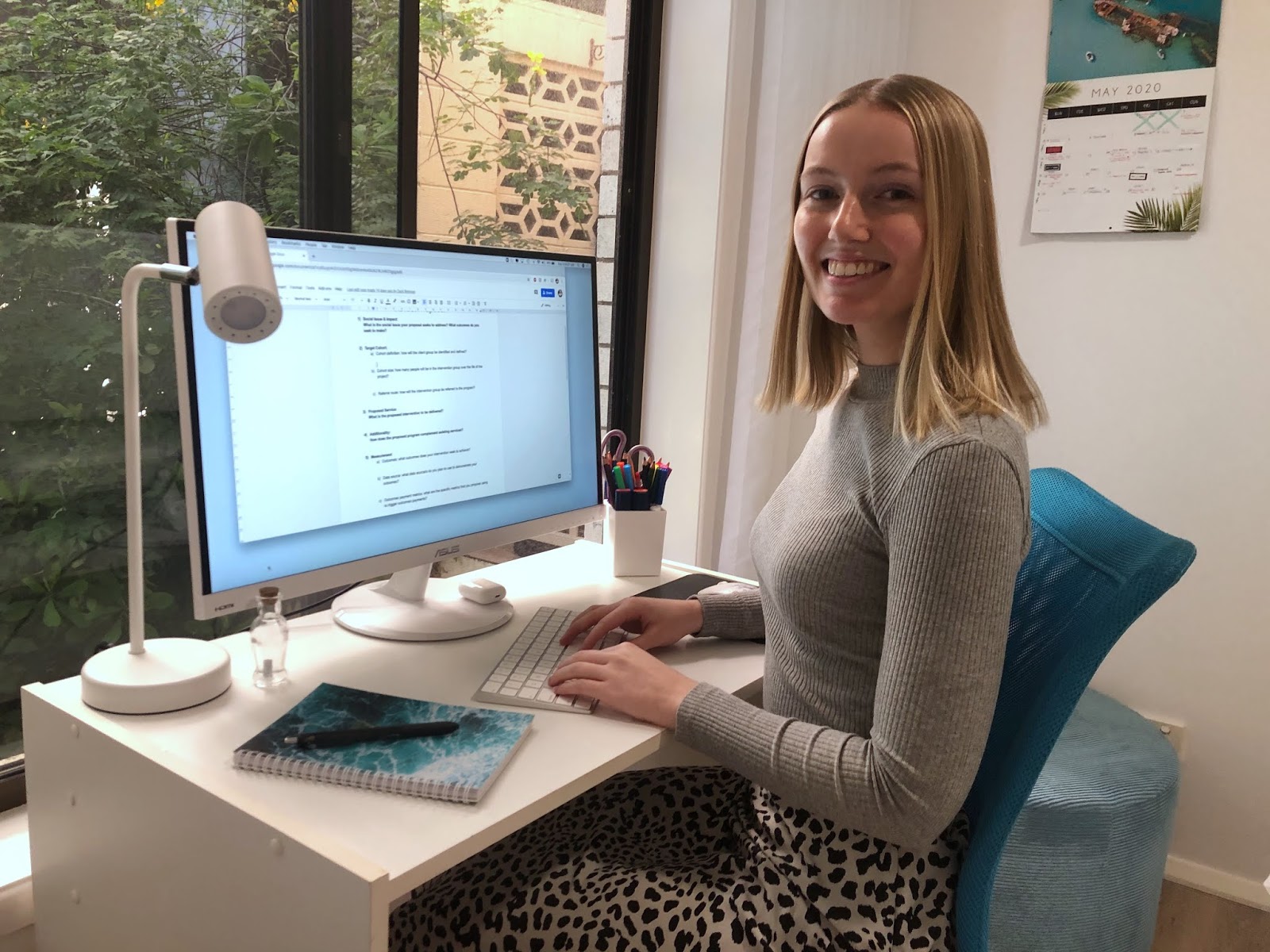
My Local Placement Program experience: Alyssa Wong

Bachelor of Commerce and Bachelor of Advanced Studies student Alyssa Wong shares her experience on the Local Placement Program (BUSS2100/BUSS6500).

What is the Local Placement Program?

The Local Placement Program allows business students of all majors to gain corporate work experience at a leading firm while obtaining university credits. This unique Work Integrated Learning unit offered by the University of Sydney matches students to a suitable role and firm based on your preferences and fit. 

How did you apply?

I applied in Semester 1 of 2019 and the application process consisted of submitting a CV and letter of motivation. Once I passed this initial screening, I completed a virtual interview, group case study and individual writing component before receiving an offer. For some internships, including my own, a final face-to-face interview with the host company was required. For future applicants, I would use this opportunity to polish up online interviewing skills as most internship recruitments now occur online, especially with social distancing measures in place.


Placement Program students Dhruv Sood, Phoebe Yang, Alyssa Wong, Hugh Dawson, Rishabh Khanna


Where did you work?

The Placement Program team matched me to Macquarie Group, a leading Australian Investment Bank, based in Sydney’s CBD. With my Finance and Banking majors, I was placed in the equity research team covering Banks and Diversified Financials. In this role, I strengthened my analytical skills and helped publish content in Macquarie Insights Reports.

How did the program help your career?

The Local Placement Program offers many students their first internship, at a reputable host company no less. This will automatically highlight you in any application process. Furthermore, my supportive team assigned tasks that were both interesting and challenging, providing me with many learning opportunities for hard and soft skills development relevant in the financial sector.  

What was the best part of your placement?

The best part of my placement was the opportunity to work with and meet a diverse range of bright industry professionals. I was able to connect with people within my team and other business units within Macquarie Group, where I gained more insight into the world of finance and banking. Ultimately, this helped me understand the possibilities of where I could take my career.

What was the biggest challenge and what did you learn from it?

One of the challenges I encountered as a university student working with seasoned industry professionals was the lack of self-confidence I had in my skills. It was exciting to intern in an office where colleagues' careers span longer than my age as I could learn so much, but I felt inexperienced. I overcame this challenge and improved my self-confidence by asking questions if I needed clarification on tasks and being proactive in developing relationships with my buddy, colleagues and fellow Local Placement Program interns.

What advice would you give other students? 

For future Local Placement Program applicants, I would recommend leveraging the support the university provides to put your best foot forward. I utilised the Careers and Employability Office for resume and cover letter checking, mock online interviews and case study workshops. In retrospect, I was grateful for this experience as it was similar to summer internship applications this year. I also recommend reflecting upon the daily tasks you completed as an intern as you can refer to your notes to recall experiences and quantify your impact during future job interviews. Lastly, strive to build good working relationships with your colleagues and offer your help to people inside and outside your team as you never know what valuable insight and advice they can give you to develop personally and professionally.

5 June 2020

My Self-Sourced Placement Program Experience: Paris Vergan

Bachelor of Commerce student Paris Vergan shares her experience on the Self-Sourced Placement Program (BUSS2200/BUSS6514).

What is the Self-Sourced Placement Program?


The Self-Sourced Placement Program is one of the University of Sydney Business School’s work-integrated learning (WIL) programs. This program is fantastic for individuals who have already sourced internships and want to gain academic credit and reflective skills. It allows you to choose your own pathway to employment by deciding upon a role you know you will enjoy, in a company which values align with your own.

Paris Vergan

How did you source your placement?


I attended a corporate partners networking event hosted by the Business School and sat next to who became my supervisor! By engaging with him about my passions for Marketing and Commercial Law, he offered me an opportunity to interview for a work placement. After following up, I got the job!

Applying for the program was super easy and consisted of submitting an expression of interest to the WIL hub. After reviewing and confirming my application, University staff were extremely supportive and offered one on one consultations every couple of weeks to check up on my experience and help discuss any reflective tasks.

Overall, I am really fortunate I underwent the placement as it allowed me to experience the workforce, expand my professional network, develop practical skills and enhance my reflective abilities.


Where did you work and what did you do?


I underwent my placement at the French Embassy Trade Commission, working in their commercial division ‘Business France’ as a Trade Advisor. The role entailed assisting the growth of French businesses in Australia by performing market research studies on specific industries and identifying areas of opportunity, as well as facilitating partnerships between French Businesses and Australian companies.

I worked on a number of large-scale projects, such as organising industry conferences, business to business round table workshops and international webinars. This allowed me to gain specific industry knowledge, develop interpersonal skills by building rapport with our clients and overall achieve greater confidence in my professional abilities.


What was the biggest challenge?


One of the largest challenges my team and I faced was the shift from in-person collaboration to virtual teams due to COVID-19. This reactive change meant my colleagues and I had to adopt new online systems to communicate effectively and set up productive workspaces at home to adapt to the external circumstances. The experience taught me lot including how important it is to develop clear lines of communication, how to become flexible and open to new ways of achieving tasks and that setting team goals is really helpful to stay motivated. Overall, I believe this learning opportunity was quite unique and equipped me with great skills to use in future teams which may collaborate virtually.


How did the Self-Sourced Placement Program help your career?


The placement has offered me a wide array of new experiences, such as liaising with international clients, growing accustomed to cultural challenges, organising large scale events and developing interpersonal relationships with long-term partners. It has been a highly rewarding experience as I have been able to develop skills in cultural competence, effective relationship management and timely communication. Most importantly, the placement helped me gain a perspective of what it is like to engage in a professional work environment, make friends who happen to be co-workers and gain a new social circle.

The best thing about taking on a local placement is the proud feeling of accomplishment when your colleagues acknowledge your work, as well as the fun after-work social gatherings. I would highly recommend the Self-Sourced Placement Program as it will allow you engage with a professional work environment, network with like-minded people and develop practical skills for future employment.


Students can now enrol in the Self-Sourced Placement Program for Semester 2, 2020 via Sydney Student. Learn more about the Self-Sourced Placement Program here.

24 August 2015

Adventures in India

This past July I have had the opportunity to work with the social enterprise, Pollinate Energy, through the Business School's Community Placement Program. Pollinate Energy aims to improve the lives of India’s Urban poor. Every year, thousands of Indians are migrating from their rural villages to these urban slums. These people are seeking employment and these harsh living conditions, often without electricity, act as a gateway to the city. Pollinate Energy helps these people by employing locals to sell them solar lights and fuel efficient cookstoves.

I was placed in Hyderabad, the first city for Pollinate to expand their working model to in Bangalore. The program ran for four weeks where we worked on different aspects of the organisation in a group made up of ten kiwis and aussies, and six local Indians. The international students were all living together in an apartment called the ‘Hive’ which doubled as our work space.


We were split into three different working groups, each with a mix of international and Indian students. I was lucky enough to be in the team that was coaching the new ‘Pollinators’ – local’s who want to help, and are looking for a job. By targeting this demographic, those in the slum communities are more likely to relate and can more easily communicate with the Pollinators. At the same time it’s giving someone a job, skills and an international network which is quite rare for these people in a place like Hyderabad!

My training partner was Shanti – she might look cute but she was tough coach. She also acted as a translator between Vinay (our Pollinator) and I, translating both Telagu (the local language) and body language. I learnt that the Indian head wobble meant anything along the lines of yes, no, maybe, I’m listening to you but hurry up and finish and I’m telling you yes but I’m not going to hold my promise – something I found quite frustrating not understanding!


In the mornings we three would get together and discuss the what had gone well the day before, and where there was room for improvement in Vinays sales techniques. A big challenge we faced was developing trust between us, and those we were trying to help, as they had never had any kind of interaction with Pollinate before. In the afternoons we would head out to a selection of his designated slum communities, which were randomly scattered amongst the high rise buildings in the city or near new construction sites. The contrast was incredible.

The approach to business is completely different in India and it definitely took awhile to adjust. For example, what’s considered rude and what isn’t. Apparently it isn’t considered rude to answer your phone mid-way through a sale of a product? Calling your employer the day you are heading to your village for a week long festival is not uncommon. And as for the stretchable nature of ‘Indian Standard Time’ the difference between 5 minutes, three hours, two days late or a day early to an interview is minimal – oh and your welcome to bring a mate. All these things become less surprising when you start operating in the same environment.


People in the communities were extremely welcoming, pulling out chairs for us to sit on and offering us food. They take such pride in their huts, it’s difficult to not feel guilty for being treated so well, when the average wage is less than $2 a day, but it actually means more to them if you accept their offers. This cute woman even did Henna for me! She saw me watching her pluck leaves from the tree and grinding them into a paste for her daughters, so invited me over to have it done.


I would highly recommend this program to anyone considering a career path in renewable energy engineering, an interest in social enterprise, or even just for personal development. The $2,000 Pollinate Energy Community Placement Scholarship from the University of Sydney was a huge help in getting me to India. It was such a challenging but rewarding experience where I directly saw the impact Pollinate is making. Although it was sad saying good bye to the Pollinators we still keep in touch on whatsapp, see who has sold the most lights and make sure the ‘Hive’ is still buzzing!


Esther McArthur
Current student at the University of Sydney

Applications are now open for Pollinate Energy's fellowship programs in December and February. Grow your skills as a leader, an innovator and a social change-maker while bringing renewable energy solutions to urban poor communities in India. Hurry – applications close 4 September! Learn more: http://bit.ly/1I6Qyxa

12 May 2015

A Light in the Dark

I arrived in Bangalore, India in the evening. A beautiful red sunset hung over the city skyline as I was driven to ‘the hive’, where our team was to live and work for the next four weeks. I was in India as part of the Business School's Community Placement Program, to partake in a month long fellowship with Pollinate Energy, a social business that enables access to sustainable technologies. Founded by a group of Australians, Pollinate Energy seeks to do social good by targeting groups of people that otherwise have no access to these technologies by making the technology affordable, and by remaining fully accountable to the customer and ensuring that the products are fulfilling their purpose.

Over 292 million people in India live without electricity. They rely on very crude technologies for their light and heat, most often kerosene lamps. These lamps are not only expensive to fuel, bad for the environment and a poor source of light, but they’re incredibly toxic. Indian families are forced to risk carbon monoxide poisoning and respiratory disease just to light their lives after dark.


Pollinate Energy has developed solutions based on solid research and community understanding. Not only is Pollinate fighting kerosene poisoning through the use of solar lamps, but by hiring Pollinators to sell and distribute the product, they’re creating employment too. They’re giving individuals in slum communities the chance to stand on their own feet and be stakeholders in their future growth.

My role was to work within a team to develop a strategy to sell a new product range of water filters, and to continue selling the solar lights to the communities around Bangalore. Unlike traditional internships, we were given a huge amount of responsibility early on, and it was up to us to steer the direction of the new product sales – a task that was daunting at times, but hugely rewarding. Our average day involved brainstorming ideas for the most effective way to sell the water filters, and then setting out into the communities in the afternoon and evenings to try out different methods to sell the products with local Indian entrepreneurs.

Perhaps one of the most confronting things about the working with Pollinate Energy was being faced with the sheer poverty in some of these communities and the obvious language barrier that existed. However, it was a joy to see that even though the people living in these communities lived in such adversity, they seemed so cheerful and happy.

I learnt a significant amount about social business in my time at Pollinate. As it doesn’t operate like a charity or a traditional business, the company has to carefully balance both the economic and social goals of the enterprise to ensure their mission and goals are met. In the case of Pollinate Energy, their goal is to reach more people by expanding their operations into nearly every major Indian city by 2020. They know they can’t do this by giving away products for free, so in order to reach more people and create a greater social impact, they sell the lights and other products to create more revenue, and therefore scale up their social impact.

It was hugely rewarding to meet our goals of selling over 50 water filters by the end of the month. When the solar lights were first presented to the communities, they took time to gain widespread adoption – and now they literally sell themselves. Hopefully we see the same result for the water filters, as a simple change in the cleanliness of drinking water could have a huge impact for the lives of the people in these communities.


Scott Ellice-Flint
Current student at the University of Sydney Business School